Freelance Contract Checklist: Scope, Payment, Revisions, and IP
Use this freelance contract checklist to clarify scope, revisions, payment, ownership, confidentiality, delays, and project cancellation.

Taxes are the least fun part of working remotely, and they're also where people quietly lose the most money. The rules shift a little every year, and if you moved, started freelancing, or worked from another country in 2025, your return is going to look different this time. Here's what's worth checking for the 2026 tax year. One caveat up front: the specifics depend on where you live and work, and they change, so treat this as a map, not the final word, and confirm the numbers with your tax authority or an accountant.
Working remotely tangles up a question that used to be simple: who do you actually owe? When your home, your employer, and the laptop you're typing on can be in three different places, more than one government may have a claim on your income. That's the thread running through almost every change below.
Where you pay usually comes down to where you live and where you physically did the work, not where your company is based. If you split 2025 between states or countries, count your days. A lot of places use a presence threshold (the 183-day rule is common, though not universal), and crossing it can make you a tax resident whether you meant to or not. Keep a simple log of where you were and for how long.
This one trips people up constantly. If you're a regular employee on a payroll, in many countries (the US included) you can't deduct your home office at all, even if you work from your kitchen every day. If you're self-employed or freelancing, you usually can, but the space has to be used regularly and only for work. Measure it honestly and keep records.
No employer is withholding tax for you anymore, so that's your job now. A safe habit is parking roughly 25 to 30 percent of what you earn in a separate account the moment it lands. Many places also expect you to pay tax in installments through the year rather than one lump in spring, and skipping those can mean penalties. Self-employment can also carry its own extra tax in some countries, so budget for more than just income tax.
If you worked from another country, read this twice. A digital nomad visa is not the same as being tax-free. Once you spend enough time somewhere, that country may want a cut, and your home country might still tax you too. Tax treaties and rules like the US foreign earned income exclusion exist to soften double taxation, but they have conditions and paperwork. This is the area where a one-hour conversation with a cross-border accountant pays for itself.
A handful of numbers get adjusted almost every year, usually for inflation: tax brackets, the standard deduction, retirement contribution limits, and standard mileage or expense rates. Thresholds for platform and gig income reporting (the forms services send when you get paid through them) have also been shifting, so if you earn through apps or marketplaces, check the current trigger. Don't assume last year's figure still holds, look up the 2026 number before you file.
Don't assume this year works like last year. Don't ignore the place you physically worked from just because your employer is somewhere else. Don't mix personal and business spending in one account, because untangling it later is miserable. And don't leave it all until the night before the deadline.
Remote-work taxes reward the boring stuff: a day log, a separate account, a percentage set aside, and a quick check of this year's numbers. Do that, and filing for 2026 is mostly admin instead of a scramble. Because the details shift each year and depend heavily on where you are, the smartest move is to confirm the specifics with your tax authority or an accountant who understands remote and cross-border work, ideally before the year ends, not after.

Use this freelance contract checklist to clarify scope, revisions, payment, ownership, confidentiality, delays, and project cancellation.
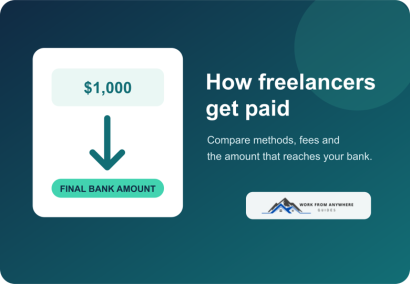
Compare freelance payment methods by country support, client convenience, total fees, currency conversion, withdrawal, and payment risk.
Leave a Reply
Comments