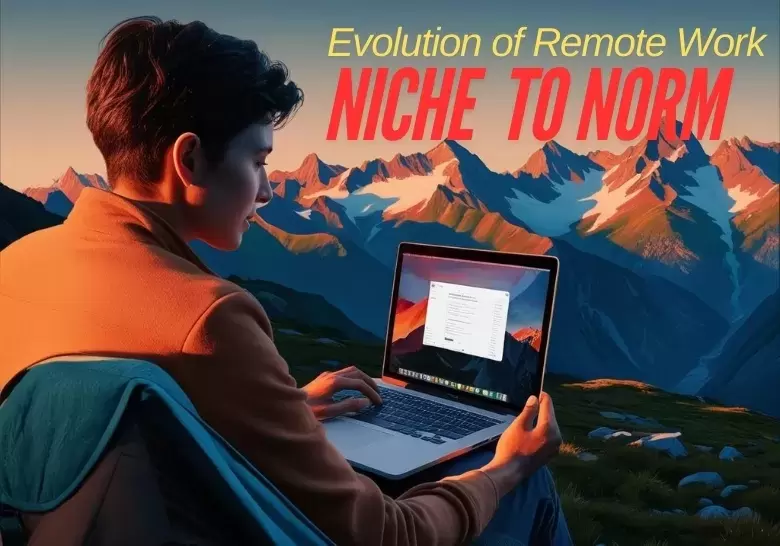
The Evolution of Remote Work: From Niche to Norm
Remote work has grown by leaps and bounds in the last few decades. It was once an exclusive niche for only the most tech-savvy professionals but has since become a mainstream working model adopted by millions worldwide. From online freelance platforms that first made it possible to the COVID-19 pandemic that sent the whole world home, it has transformed our understanding of employment, productivity, and workplace culture. This blog post undertakes the journey of remote work from a niche practice toward becoming the new normal and what the future may hold.

1. The Early Days: Telecommuting as a Perk
Key Aspects:
- The early adopters of telecommuting: Telecommuting, popularly known as remote working, has its early start in the way that some small percentages of employees in tech and creative services were accorded this perk. The earliest users of the concept could feel the benefits of working from home or from anywhere else, but it was not something taken on by many at that time.
- Technological Limitations: Inefficient technology was one key factor that gave rise to the killing days of telecommuting. Slow internet speed, very expensive communication tools, and no cloud computing made it difficult for companies to fully embrace the idea of working in remote teams.
Key Factors:
- It is available only for employees who have roles in tech or creative industries.
- It was also utilized by only some of the employees as a support tool to achieve work-life balance.
- It was not widely adopted due to technological reasons.
2. The Rise of Freelancing and Digital Nomadism
Key Aspects:
- Freelancing Boom: With the advancement of technology, freelancing platforms have emerged-up with various marketplaces to offer services. Freelance work in the mode of writing, designing, coding, and marketing was skyrocketing.
- Digital Nomads: Since the beginning of this decade, this movement has taken off wherein the digital nomads lead a location-independent lifestyle with their work being undertaken from anywhere else through remote working. Now, after co-working from a coffee shop in Bal or sipping coffee at the corner of a street in Bar, one could work anywhere, anytime-from behind his or her laptop and connected through broadband.
Key Factors:
- With the advent of freelance platforms, numerous individuals could now work from their homes.
- The Culture of Digital Nomadism
DIGITAL NOMADISM emerged as a lifestyle for an individual to attain flexibility and adventure.
- Greater awareness that remote work is possible in all sectors.
3. The Technological Revolution: Tools for Remote Collaboration
Key Aspects:
- Cloud Computing and Collaboration Tools: Moreover, the arrival of cloud computing laid the groundwork for remote work to become more feasible with the help of platforms for file sharing like Dropbox and collaboration tools like Slack, Trello, and Zoom so teams could potentially share files instantaneously, communicate in real time, and connect effectively from anywhere around the world.
- Virtual Meetings and Remote Teams: Organizations began to accept remote work. With virtual meetings, tools like Zoom, Microsoft Teams, and Google Meet became the lifeline for communications and collaboration between employees, turning remote work into a feasible option for most of the industries.
Key Factors:
- Cloud technology is what made easy real-time collaboration possible.
- Communication tools have made virtual meetings and collaboration very efficient and remote work accessible as the industries incorporated these technologies into the workplace.
4. The COVID-19 Pandemic: A Global Shift
Key Aspects:
- The Global Remote Work Experiment: The COVID-19 pandemic accelerated remote work in ways never before seen. Lockdowns and social distancing forced companies worldwide to adopt the remote work model, whereas remote work was considered a temporary solution for many.
- Changing Attitudes: As businesses and employees learned the ropes of working from home, increased productivity, better work-life balance, and lower overhead costs were realities for many. This resulted in many sectors embracing full-time remote work when lockdowns ended.
Key Factors:
- Remote work was a new aspect of the lives of many during the COVID-19 pandemic.
- Companies realized how useful remote work is and recognized that things had to be changed in the long run.
- Employees adapted themselves to new technologies and transformed their working style, which took remote work into the mainstream culture.
5. The Future of Remote Work: Hybrid Models and Global Teams
Key Aspects:
- Hybrid work models: With the gradual return to normalcy worldwide, hybrid work models would be the new trend, where employees spend equal time working from home and in the office. This way, a company will enjoy a balance between flexibility and a taste of its culture and collaboration.
- Global Talent Pool: With remote work, organizations can no longer be confined to gathering their sources of talent to a fixed geographic location. They are able to reach out globally and hire the best available talent for the job irrespective of where these candidates may be based.
Key Factors:
- Hybrid models of work will ensure a flexibility level to manage office and remote work.
- Companies are now reaching out even to hire remote employees, a phenomenon that comes from all parts of the globe.
- The future for work is more work on flexibility. Work will grow significantly on collaboration across the world and with more technology-based solutions.
The evolution of remote work from a niche concept to a mainstream practice has been driven by technological advancements, cultural shifts, and global events. As more companies embrace remote and hybrid work models, the future of work is likely to be more flexible, diverse, and inclusive. For both businesses and employees, remote work offers opportunities to rethink how, where, and when we work—paving the way for a new era of productivity and collaboration.
How has remote work changed your life or business? Share your experiences in the comments below!


Leave a Reply
Comments